
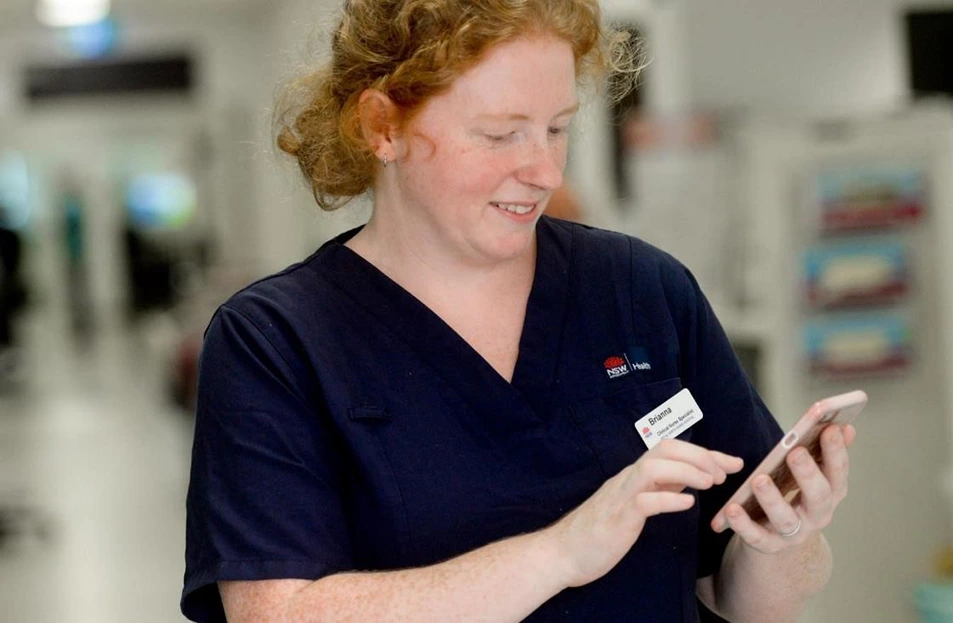
Role Based Messaging (RBM) is a clinical communication solution available within Microsoft Teams. RBM replaces non-critical paging and lets clinicians send fast, secure messages to clinical roles rather than individuals, connecting them directly with the on-duty specialists without checking rosters or call switchboards. It provides a complete, trackable, close-loop communication system for time-poor clinicians to communicate and collaborate more efficiently. RBM enables users to send 4 types of messages: chats, consultations, information request, and Significant Results Notifications (SRN).
Listen to our podcast
Snapshot of virtual care: Role Based Messaging
4 February 2026. Duration: 11m 35s
This episode explores how Role Based Messaging streamlines secure clinician-to-specialist communication, enabling faster consults.

The Challenge
When clinicians need an on-call specialist, they traditionally page and wait by a landline for a call back. They often don't know who's rostered on, which can lead to multiple pages before reaching the right person. This one-way communication can create delays, offers no context about the patient, and keeps clinicians tethered to the phone. Role Based Messaging solves this by showing who is currently ‘checked in’ to each clinical role within Microsoft Teams. This allows clinicians to hold video calls and message the on-duty specialist directly, such as the cardiology registrar or toxicology team. The receiving clinician can then review patient details before responding and call back directly from the chat.
The Plan
eHealth NSW developed Role Based Messaging as part of the MedSync suite in close collaboration with clinicians at Western Sydney Local Health District (WSLHD). The team built the solution within the existing Microsoft Teams environment, ensuring secure communication and leveraging infrastructure already in place across NSW Health.
WSLHD piloted the platform with a handful of clinical roles, and clinical feedback shaped ongoing development. The team took an agile approach to add features and refine functionality and surveyed clinicians regularly to gather their feedback. This helped drive continuous improvements to the solution.
Now the solution is available across multiple specialties and has expanded beyond clinical consultations to include non-clinical tasks.
The Outcome
Role Based Messaging is now live at Western Sydney Local Health Districts and supports 201 roles across multiple specialties including emergency medicine, cardiology, plastics, respiratory and toxicology.
"You don't need to know the name of the person you're trying to contact. You just need to know their role. All that waiting around a landline is now over. You can be walking around, attending to other tasks or seeing other patients. You send that message out on your mobile phone." - Chief Medical Information Officer, Professor Naren Gunja, Western Sydney Local Health District.

The Benefits
Role Based Messaging (RBM) allows clinicians to communicate in real time, ensuring the right specialist receives information straight away, avoiding missed callbacks or communications gaps.
Role Based Messaging:
- enables front-line healthcare staff to search, find and message a clinician quickly when only their clinical role is known, replacing all non-critical paging
- saves clinicians time by connecting them with the right checked-in specialist immediately and with ease
- provides a complete, trackable, close-loop communication system
- supports fast decision-making and timely medical management for patients
- can be installed easily on PC or mobile.
"Not having to go through the switchboards, knowing that you can just send a message to a role that you are looking for is really beneficial, especially for our radiologists trying to get to the ED medical officer." - Medical Imaging team member, Western Sydney Local Health District.
Key statistics


live at Western Sydney Local Health District
consultations since pilot
Significant Results Notifications (SRN) since pilot
chats since pilot
Data reported January 2026